
Abstract
Over recent years, digital platforms and services have become ever more competitive. As competition has intensified, companies have found new ways to maximize profit. Deceptive patterns are design tactics in user interfaces that manipulate and deceive users, compromising user agency and privacy. Although research has focused on deceptive pattern taxonomies and end-user experiences, a gap still exists in understanding designers’ perspectives on deceptive patterns. This study examined user experience and web designers’ (N = 34) conceptualizations, familiarity, and reasons to implement, or not to implement, deceptive patterns.
The results indicate that designers had a strong ethical commitment to avoiding deceptive patterns, although their companies generally lacked related policies. Business, design, and user-benefit reasons motivated the implementation of deceptive patterns; conversely, designers’ values, possible business harms, and legal implications reduced the implementation. Our results advance current knowledge of why deceptive patterns are implemented and how designers reason through their actions from the perspective of their personal values and from an organizational perspective.
Keywords
deceptive patterns, dark patterns, deceptive design, manipulative design, designers, value
Introduction
UX designers have created different embodiments through their designs, affecting how we act and experience the world (Sunstein, 2015). Designs have influenced user choices, which can result in ripple effects that extend to societal and organizational levels (Weinmann et al., 2016). This has been seen, for example, in incidents of excess spending (Niedermoser et al., 2021; Pricopoaia et al., 2020), gambling, and game addiction (Al-Msallam et al., 2023; Yani-De-Soriano et al., 2012). Constant exposure to deceptive and manipulative design tactics, along with infringed privacy, has been recognized to cause decreased organizational and societal trust (Aung et al., 2024; see also Bhoot et al., 2020; Rousi et al., 2024; Voigt et al., 2021; Waldman, 2020); this exposure has had a negative effect on the brand experience (Singh et al., 2025). Furthermore, deceptive design has caused several harms on an individual level such as psychological distress (Mildner & Savino, 2021) and loss of time, money, and privacy (Brignull, 2023; Mathur et al., 2021); it has caused harm at the community level, for example, on markets (Day & Stemler, 2019; Mathur et al., 2021) and collective welfare (Mathur et al., 2021). Thus, the effects of design patterns must be well understood by designers to avoid creating choice architectures that affect users in unethical ways (Weinmann et al., 2016; Willermark & Islind, 2022). Yet perhaps it has become even more pertinent for designers to understand why unethical, deceptive design practices have been used and how designers engaged in these practices. These deceptive patterns (hereafter referred to as DPs) should be examined to understand the external and internal (value-based) factors relating to designers.
DPs have been identified in various UIs such as online shopping websites (Mathur et al., 2019), games (Zagal et al., 2013), social media platforms (Mildner et al., 2023), and video streaming platforms (Chaudhary et al., 2022). DPs have deceived and manipulated users (Brignull, 2010); they were designed based on the knowledge of human psychology and sociology, that is, the understanding of how specific stimuli influence human behavior (Alberts et al., 2024; Gray et al., 2018). However, DPs have not been solely implemented by the designer’s intent but might be incorporated for various other reasons (Gray et al., 2024b). DPs have typically been used in favor of shareholders, but not necessarily all stakeholders, particularly when considering the balance between user values and commercial value in technology interaction (Caragay et al., 2024; Gray et al., 2018). This has become visible in multiple complaints and lawsuits targeting large multinational companies for using DPs (Brignull et al., 2023).
Recent research on DPs has focused on identifying, defining (Mathur et al., 2021; see also Bösch et al., 2016), and developing taxonomies and ontologies of the phenomena (Mildner & Savino, 2021; see also Gray et al., 2018; Mathur et al., 2019). The focus has also been on ethical considerations (Gray et al., 2018; see also Fansher et al., 2018) and end-user perspectives (Di Geronimo et al., 2020; see also Bhoot et al., 2020). In addition, DPs as a practitioner-focused concept have also been referred to as a subtype of “asshole design” (Chivukula et al., 2019), and the designers implicated in this behavior have been referred to as “asshole designers” in online discussions (Gray et al., 2020). The perspective of designers on creating and implementing DPs has been less studied but with more focus mainly in recent publications (Beattie et al., 2024; see also Gray et al., 2024a; Zhang-Kennedy et al., 2024), but designers’ understanding and their reasons to use, or not to use, DPs have not been systematically mapped. The perspective of organizations and how company culture has influenced the design and implementation of DPs has not been a research focus. The reasons why and how DPs have been implemented, both from the perspectives of the designers and organizations affecting the practice, have become key factors in understanding the ubiquitousness of these patterns. By advancing pragmatic knowledge of how and why DPs are implemented, we can accelerate towards regulatory procedures.
In this current study, designers’ understandings, design practices, and organizational effects on designing and implementing DPs were examined through a survey. Industry professionals (N = 34) who work with web and UX design participated in the study. To construct the survey questions, we used the high-level patterns (forced action, obstruction, sneaking, nagging, interface interference, and social engineering) from the ontology produced by Gray et al. (2023).
Background
DPs have been considered a counter-stream to traditional UX, as the main objective has involved deceiving, manipulating, and coercing users (Brignull, 2010). The phenomenon has also been considered a design paradigm, in which interfaces are leveraged for user exploitation (Rogers et al., 2021). The foundations of UX research and design have been based on positive psychology (Seligman & Csikszentmihalyi, 2014; see also Norman, 2004) and enhancing human well-being while interacting with technology (Calvo & Peters, 2014, 2015). Yet, recent years have revealed a fine line between developing effective UX in designs that appeal to users and consumers on numerous levels with the user’s interest in mind versus deliberating effective UX purely for business profits (Phillips, 2017), highlighting the irony of using a human-centered UX mindset and employing empathy to engage in design to maximize business profit.
Thus, for UX, the boundaries between pleasing and manipulating users have been complex. UX has been driven by the premise that, within a market full of the same products, regarding functions and performance capabilities, some factors in the aesthetics, features, and narratives of the designs attract people more than others. These days, values, ideologies (that is, sustainability and fair trade, etc.), and megatrends have increasingly been raised to the fore within the experience of consumable designs (Cockton, 2020; see also Jordan, 2000). The trouble has been that, to some extent, the design of DPs has drawn on a similar theoretical repertoire to that of UX. Moreover, both approaches to digital design have focused on capturing the emotions of users (prospective consumers) and ultimately the revenue incurred by both. But, where the affective romance of value-based and ideologically driven UX has ended, the nightmare of deceptive design has begun, eroding the very integrity of what could have been earnest endeavors to attract and maintain consumer and user loyalty (Bilgihan, 2016; Cheng & Jiang, 2020).
From Patterns to Deceptive Patterns
Generally, the word pattern has referred to a perceptual structure of repeated arrangement of lines, shapes, colors, or a series of numbers (Cambridge University Press & Assessment, 2024). It has also been referred to as a reliable sample of traits, acts, tendencies, or other observable characteristics of a person, group, or institution, and their behavior (Merriam-Webster, 2024). Designing for a pattern has aimed to produce something that predictably repeats. A pattern has been decoration, a shape that has guided users to make something, or an unperceived arrangement of features and objects that has subconsciously steered users to a particular behavior. The phenomenon of DPs has been relatively recent, and according to Narayanan et al. (2020), it derived from three trends: deceptive retail practices, research on nudging, and growth hacking. The term, dark pattern, appeared to have been coined by Harry Brignull in 2010, referring to utilizing the knowledge of human psychology to trick users into doing something they did not mean to do (Brignull, 2010, 2023). Currently, Brignull has used the terms deceptive pattern and deceptive or manipulative pattern instead of dark pattern (Brignull, 2023; Brignull et al., 2023). Similarly, in this article, we used the term deceptive pattern, regardless of what term the previous research has utilized, following the ACM Diversity and Inclusion Council’s (2025) guideline for inclusive language. The term dark pattern has raised concerns about the ethicality and inclusiveness of its wording, as the word dark in dark pattern has been connected to what is bad and deceptive.
DPs have been developed based on repetitive design patterns and often blended into UX design, utilizing UX and UI design mechanics such as pop-ups, suggestions, and hierarchies. Mathur et al. (2021) described DPs as something that modified the user’s choice architecture either by altering the decision space (for example, using UI elements to steer users towards certain acts) or by manipulating the information flow (for example, hiding information from users). Similarly, Kollmer and Eckhardt (2023) pinpointed the effect of DPs in choice architecture, defining DPs as UI design elements that “compromise user autonomy by preventing informed choices” (p. 202). This loss of autonomy has led to negative consequences, such as “invasion of privacy, financial loss, and technology addiction” (p. 202). Loss of user autonomy has also been highlighted by Gray et al. (2024b), who defined DPs as implementations of design choices that “subvert, impair, or distort” a user’s ability to make “autonomous and informed choices.” In a different approach to help designers understand what to design, rather than what to avoid, Caragay et al. (2024) refined the definitions by suggesting a design is deceptive when it violates user expectations for the application provider’s benefit. In summary, DPs have decreased user autonomy, modified choice architecture, and steered users towards, or restricted them from, actions that lead to negative consequences.
Deceptive Pattern Taxonomies
Several taxonomies of DPs have been presented. Some have been general (Conti & Sobiensk, 2010; see also Gray et al., 2018), whereas some focused on specific application areas, such as on games (Zagal et al., 2013), proxemic interaction (Greenberg et al., 2014), and extended reality (Krauss et al., 2024). Also, some taxonomies emphasized a specific viewpoint on DPs, such as the taxonomy by Potel-Saville and Da Rocha (2024) that lists DPs with corresponding fair patterns. In addition to academic publications, taxonomies of DPs have been found in public reports (Competition and Markets Authority, 2022; see also Lupiáñez-Villanueva et al., 2022).
In this study, we utilized the ontology produced by Gray et al. (2023) due to its comprehensiveness in covering and integrating previous works into DPs. In addition to public reports and the taxonomy produced by Brignull et al. (2023), the ontology by Gray et al. (2023) has built on the academic work by Bösch et al. (2016), Gray et al. (2018), Luguri and Strahilevitz (2021), and Mathur et al. (2019). Bösch et al. (2016) focused their work on deceptive strategies and DPs in the context of privacy design. Mathur et al. (2019) studied 1818 instances of DPs found on 1254 shopping websites. Based on their findings and previous literature (especially labels suggested by Gray et al. (2018) and by Brignull et al. (2023) in their taxonomy in 2018), they created a taxonomy of 15 types of DPs. The taxonomy suggested by Luguri and Strahilevitz (2021) was built mainly on the taxonomies by Bösch et al. (2016), Gray et al. (2018), Mathur et al. (2019), and Brignull et al.’s (2023) taxonomy from 2020.
Colin Gray and colleagues have investigated DPs for almost a decade. In 2018, Gray et al. (2018) published about the ethicality of persuasive design, highlighting five types of DPs: 1) nagging, which is recurring redirection of functionality from what is expected to something else; 2) obstruction, which is making tasks more difficult to perform than needed; 3) sneaking, which is hiding, disguising, and inducing delays in revealing crucial information; 4) interface interference, which is manipulation in the UI that prioritizes particular actions; and 5) forced action, which is asking users to perform a task to obtain access. A preliminary ontology of DPs that combined the 2018 taxonomy with nine other taxonomies was published by Gray et al. in 2023; Gray et al. analyzed the clusters and mappings of the ontological taxonomies of DPs, not simply in terms of type, but level (high, meso, and low). This ontology introduced social engineering as a high-level type pattern in addition to the types described in Gray et al. (2018). This addition was motivated by the introduction of patterns related to social psychology and behavioral economics, especially by Mathur et al. (2019), and referred to deceiving users with false beliefs and via personalization.
The preliminary ontology (Gray et al., 2023) was soon followed by the actual taxonomy, published in 2024. The actual ontology introduced a change to the high-level DPs by removing nagging as a high-level pattern and adding it as a meso-level pattern within forced action (Gray et al., 2024b). At the time this current study was conducted, the more recent ontology was not published, thus the previous ontology (Gray et al., 2023) served as the basis for the empirical investigation. Thus, we followed the categorization of high-level DPs in the 2023 version, containing nagging, obstruction, sneaking, interface interference, forced action, and social engineering.
Designers’ Perspective on Deceptive Patterns
Multiple factors have affected how UX designers act in design situations involving ethical decision-making (Zhang-Kennedy et al., 2024). Gray and Chivukula (2019) referred to the phenomenon as ethical design complexity and described it with ethical mediators. The ethical mediators described relationships between “three sets of knowledge and practices” as including individual practices, organizational practices, and applied ethics. Ethical mediators helped to describe how individual practices can be constrained by organizational practices and strengthened with applied ethics. Furthermore, individual practices have extended organizational practices and inscribed the applied ethics. For example, if company policies forced designers to act against their values, organizational practices constrained individual practices. This model (Gray & Chivukula, 2019) gave a good starting point for analyzing the factors affecting the use of DPs but allowed additions, such as the effects of laws and regulations (Zhang-Kennedy et al., 2024).
Previous studies offered some explanations for why designers have implemented DPs. For example, designers have been recognized for using DPs due to marketing and design reasons when employing tactics such as offering tangible incentives or using emotional triggers; in these instances, designers may have created designs that were manipulative rather than persuasive (Sánchez Chamorro et al., 2023). Previous studies also indicated that designers may have aimed for better usability and UX at the expense of user autonomy (Sánchez Chamorro et al., 2023; Zhang-Kennedy et al., 2024), and usability and UX principles were sometimes used to target the user’s vulnerabilities (Sánchez Chamorro et al., 2023). Additionally, design trends may have led designers to implement DPs (Zhang-Kennedy et al., 2024) as well as balance business and consumer needs (Beattie et al., 2024; Zhang-Kennedy et al., 2024). The tendency to prioritize business and design values over user values has been especially present in studies focusing on design students’ perspectives (Chivukula et al., 2018; Willermark & Isling, 2022). These rationales from previous research have shown that commercial pressure is a significant factor affecting DP implementation, implying that ethical pressure falls especially on designers of commercial services. Lacey et al.’s (2023) findings on website analysis supported this, showing that DPs are primarily used to maximize profit and cluster around sales or financial transactions.
Although designers have appeared to have a sense of being guided by intuition about what is acceptable design (Beattie et al., 2024; Sánchez Chamorro et al., 2023), designers have also had difficulties recognizing when they used unethical practices like DPs. This could have been due to a limited understanding of utilizing DPs (Beattie et al., 2024), the complexity of combining legal and regulatory knowledge to UX practice (Gray et al., 2024a), or blurry borders between what is acceptable and what is not (Sánchez Chamorro et al., 2023). Thus, previous research on designers’ perspectives on DPs highlighted the complexity of the factors affecting ethical decision-making in design and the implementation of design elements such as DPs. The factors ranged from designers’ values and capabilities to organizational factors and legislation. A deeper understanding of designers’ perspectives on DPs has become crucial because whether the DPs are implemented with designer intent or not, the designs are crafted in the hands of the designers.
Methods
To examine designer perspectives on DPs, data was collected with a survey that featured close-ended and open-ended questions (Appendix 1). The practices of the Finnish Code of Conduct for Research Integrity by the Finnish National Board on Research Integrity (2024) as well as General Data Protection Regulation (GDPR) were followed in data collection and analysis. An online survey was selected to allow anonymous reporting. The close-ended questions were analyzed via descriptive statistics, and thematic analysis (Braun & Clarke, 2006; Clarke & Braun, 2021) was employed to analyze the open-ended responses. First, the survey began with an open-ended question inquiring about designers’ conceptualizations and understandings of the concept of deceptive patterns. Second, the six types of high-level DPs were built into the survey. The patterns were described to the respondents according to the descriptions and examples from Gray et al. (2018), andsocial engineering was defined by describing the meso- and low-level patterns described in Gray et al. (2023). The questions probed: how familiar the designers were with the DP; how the designers would feel about using DPs; and if the designers could foresee a situation in which it may be acceptable to use DPs in web and UX design. If they responded with yes, the respondents were asked to provide an example of a situation that they consider acceptable. Other questions inquired whether they have used these DPs, why or why not, and how. During the data collection, we used the term dark pattern instead of DP, as we deemed it to be the most recognized term.
The next section of the survey consisted of questions from an organizational perspective to examine how the organization, its culture, and policies impact designers’ use of DPs. These were followed by an inquiry into how the designers position themselves in relation to DPs and the impact of DPs on their design profession. Participation and answering the survey were kept as easy and accessible as possible, and the vocabulary used professional language rather than academic to ensure the understandability of the discussed concepts. The survey concluded with demographic questions. On average, it took 44 min to complete the survey.
Respondents
Data was collected anonymously from 34 Finnish resident respondents (21 men and 13 women) with informed consent, including details about privacy protection by the GDPR. The participation call was shared via social media and email through the authors’ professional networks. Voluntary respondents were not remunerated for their participation.
Table 1 summarizes the respondents’ background information. Most respondents worked as in-house designers (82%); 2 were freelancers, 1 an entrepreneur, 1 a student, and 1 was unemployed; and 1 had an unknown employment type. Their work titles varied from UX designer (38%) and UX team lead (15%) to service designers (3) and visual designers (2). Working titles such as behavior designer, interaction designer, software architect, digital marketing specialist, and product officer received single mentions. The respondents’ work experience in UX and web design ranged from 1–25 years; most respondents (59%) had more than 10 years of work experience. The majority worked in large companies with more than 500 employees (18, 53%), 10 in small companies with less than 100 employees, and 1 in a medium-sized company with 101–500 employees. In response to this question, 5 described themselves as freelancers.
Typically, the respondents’ companies had 1–10 designers in a UX design team (71%). One respondent described being supported by eight outsourced designers. One respondent indicated the consultancy’s internal team collaborated with their client’s significantly larger design team. At another respondent’s workplace, UX design involved one designer with other professionals. On a scale of 1–7 (1 = no power at all to make design decisions, 7 = very much power to make design decisions), the respondents were asked to evaluate the level of power, that is, influence, that they had in making design decisions in their most recent web design project. Responses regarding their experiences were divided into three groups (Table 1). The majority (23, 67%) felt that they had significant power to make design decisions (grade 6–7), around a quarter (9, 27%) felt they had some power (grade 3-5), and 1 respondent felt they had very little power to impact design decisions (grade 2). One responded, “Cannot answer.”
Table 1. Respondents’ Background Information (N = 34)
| Employment Type | Work Title | Working Experience | Company Size Employees | UX Team | Design Influence (graded in a scale 1-7) |
|---|---|---|---|---|---|
| 28 in-house designers | 13 UX designers | 14 with 1–9 years | 18 from large, 500+ | 24 with 1–10 designers | 23 with grade 6–7 |
| 2 freelancers | 5 UX team lead | 14 with 10–19 years | 10 from small, 0–100 | 10 with 11–50 designers | 9 with grade 3–5 |
| 4 other | 16 other | 6 with 20–25 years | 6 from other | 1 with grade 1–2 |
We asked the respondents to describe what types of businesses they have worked in during the last 12 months while performing web and UX design. Multiple selections were allowed, including the possibility to indicate other areas. E-commerce was the most identified business type, followed by working on government-related projects. Education and technology were both identified five times as primary business fields. Banking and artificial intelligence systems were mentioned once. Many answers were specified with sub-themes: retail insurance, gaming, industrial, technology, healthcare, travel, energy, and telecommunications. Next, we asked respondents to describe what types of businesses they currently work in performing web and UX design. Respondents worked mainly within the same business field-related projects during the last 12 months; except 1 respondent had changed from e-commerce to a consultancy with multiple clients, 1 from government to banking, 1 from e-commerce to healthcare, and 1 from healthcare to e-commerce. One response indicated unemployment after the latest projects.
Analysis
The textual data was analyzed with reflective thematic analysis (Braun & Clarke, 2006; Clarke & Braun, 2021). In an analysis procedure comprised of six phases (Braun & Clarke, 2006), a team of three to five analysts progressed in iterations until they found mutual agreement. First, the three core analysts undertook a familiarization phase by reading, re-reading, and writing down their insights and initial ideas. Next, in a meeting, they generated initial codes for the themes by systematically examining descriptive features of the data. Then, they coded the data with the initial codes and grouped them into preliminary themes. Then they discussed the themes and modified, refined, and combined the themes into main themes and sub-themes. They reviewed the themes iteratively, defining the themes and naming them through various iterations alongside the ongoing analysis. In the last phase, they reported the results with accompanying descriptive quotes. All analysts once again discussed the main themes and sub-themes to ensure the descriptiveness and reliability of the results.
We coded most of the notions as one answer, meaning one notion. If one answer included themes of other sub-themes, the answer was analyzed as belonging to more than one sub-theme. We excluded two responses from the data for interface interference due to ambiguity (“Why not?” and “Same as above”).
Results
The survey began by examining designers’ conceptualizations of DPs. Most respondents (32, 94%) were familiar with DPs. Two (6%) respondents did not have prior knowledge of the term. Most of the respondents (22, 65%) described DPs by explaining acts towards users with 13 different verbs, such as “pushing,” “tricking,” “luring,” “cheating,” “manipulating,” “steering,” and “redirecting.”Intentional use of DPs was explicitly mentioned in 4 notions (12%). Two notions (6%) implied unintentional use, for example, “maybe even just teams accidentally creating something that is not delightful” (Respondent 12, hereafter R12). Slightly over one-third of the respondents (12, 35%) described DPs from a company interest perspective. These comments entailed, for instance, “misleading users in a way that is beneficial to the business” (R26). Ethics or morals were explicitly mentioned by 4 respondents (12%), such as “using morally questionable design patterns to influence the users’ decisions” (R25).
Familiarity and Acceptance of Using Deceptive Patterns
The respondents were asked about their familiarity with the 6 DPs (Gray et al., 2023) and their attitudes toward using them in web and UX design (Figure 1). The DPs were described as follows, and examples were provided for each DP (Appendix 1):
- Forced action: Forcing users to do something to access or continue access to specific functionality
- Obstruction: Making it more difficult than it should be for users to carry out their tasks
- Sneaking: Hiding, disguising, or delaying information from the users, so that they perform actions they otherwise would object to
- Nagging: Repeatedly interrupting users and trying to redirect their focus to something that is not in their best interests
- Interface interference: UI manipulation that emphasizes specific actions and thus confuses the users and limits discoverability
- Social engineering: Deceiving users with false beliefs and via personalization
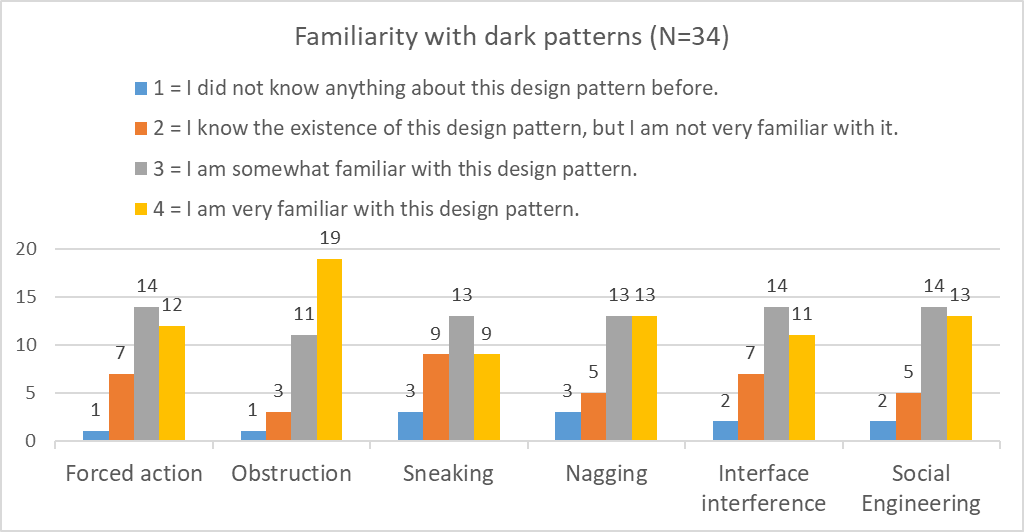
Figure 1. Respondents’ (N = 34) familiarity with the DPs.
Most respondents were familiar with the 6 DPs. Twenty-two respondents (65%) were either somewhat or very familiar with each DP, and 31 (91%) at least knew of the existence of each DP. Obstruction was the most familiar and sneaking the least familiar pattern. Two respondents were completely unaware of sneaking but were at least somewhat familiar with the other DPs; 2 respondents were unfamiliar with 3 or more DPs.
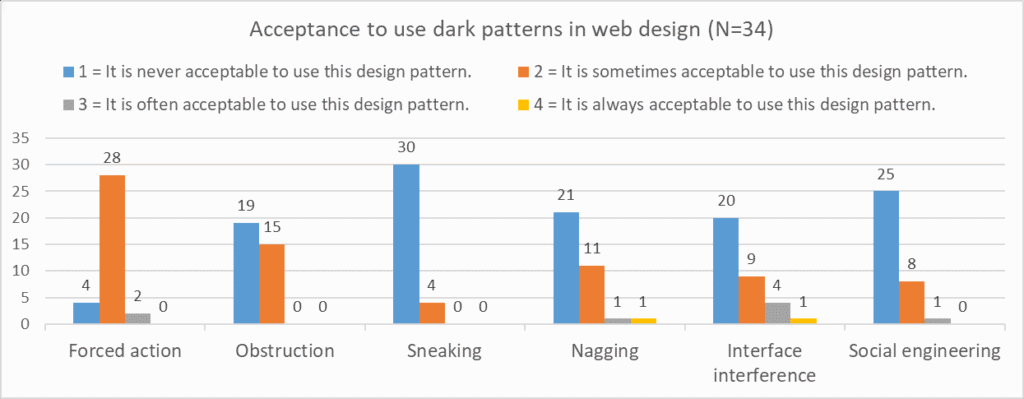
Figure 2. Respondents’ (N = 34) acceptance of using deceptive patterns.
Figure 2 presents how acceptable the respondents considered using each DP. Forced action was considered the most acceptable to be used sometimes or often; obstruction was the second most acceptable. For 2 respondents, interface interference and nagging were always considered acceptable, and 1 respondent considered forced action, nagging, interface interference, and social engineering to be often or always acceptable.
Reasons to Use Deceptive Patterns in Web and UX Design
The following section presents the results of the respondents’ reasons for why DPs may be considered acceptable and implemented in web and UX design. The respondents reported 158 notions resulting in three main themes: business reasons, design reasons, and user benefits. Within business reasons, the sub-themes concerned business model, marketing, and financial aspects. The sub-themes of design reasons concerned the need for personal data, UI design conventions, complex content, and informing users. The sub-themes related to user benefits concerned harm prevention, updates, extra benefits, and regulations.
Business Reasons to Use Deceptive Patterns
In the business reasons theme (Table 2), the business model sub-theme gathered the most notions to use DPs according to certain business models and policies. Notions related to forced action included the respondents’ view that it is reasonable to request contact details in exchange for valuable downloadable materials (for example, white papers and other resource-intensive products). Forced action was also reasoned with policy and explained that if the intended actions are available as soon as the user has read the terms and conditions, it is not misleading. Regarding obstruction, business model-related notions were explained by a respondent, for example, “…if the reason for canceling the order is too steep a payment, the system can offer the user a lower price. However, this still should be just one choice and not obscure the canceling order generally” (R3). Thus, users can be offered a better deal before canceling, yet obstruction should not be absolute. Sneaking was seen as acceptable if handling fees were added at the check-out within an acceptable rate and were visible. Notions related to nagging included that free content and services come with a price, which sometimes entails user attention; respondents compared the situation to having commercials on TV. Interface interference was justified as being acceptable when UI design solutions served to guide purchases pursued by the business.
Table 2. Business Reasons to Use Deceptive Patterns
| Business Reason | FA | OB | SN | NG | II | SE | Total Sub-Theme Notions |
|---|---|---|---|---|---|---|---|
| Business model | 8 | 7 | 1 | 2 | 1 | – | 19 |
| Marketing | 5 | 2 | – | 6 | – | 2 | 15 |
| Financial | – | 2 | – | 1 | – | 3 | 6 |
| Total DP notions | 13 | 11 | 1 | 9 | 1 | 5 | 40 |
FA (forced action); OB (obstruction); SN (sneaking); NG (nagging); II (interface interference); SE (social engineering)
The second sub-theme of business reasons to use DPs, marketing, included notions of rationalizing the use of DPs to enhance communication and customer engagement. Regarding forced action, marketing was highlighted mostly concerning referral and recruitment among friends and social networks, for example, “…referral programs are acceptable if the user gets a reward for doing so” (R10). Thus, forced action tactics were deemed acceptable for recruitment or referral if they included a reward. Notions about obstruction related directly to marketing and data collection to enhance marketing activities. Marketing was also the most often mentioned reason for nagging. Nagging was seen as getting the users to engage in the business, for example, by offering sale coupons or getting them to sign up. Two notions mentioned in social engineering are directly related to marketing: “This is the purpose of marketing. To create a need” (R2).
The third sub-theme, financial, included general notions of finance, monetary gain, earnings, and savings. Notions about obstruction described the expenses of the verification method related to logging in, the savings made when delegating account deletion, and similar, rarely needed use cases for customer service. Another notion specified that all reasons are usually business-related, emphasizing that logging out incurs business costs due to login verification methods. Regarding nagging, one notion stated that aiming for monetary gain was forcing the use of the pattern. Related to social engineering, the notions were expressed in terms of earnings, for example, “Sales. We respond to scarcity even though ethics of its use is dubious” (R7).
Design Reasons to Use DPs
The first sub-theme of design reasons (Table 3), need for personal data, was mostly justified with the provision of goods and services. The need for personal data was the most common explanation for forced action. The explanations justified its acceptability according to the need for valid contact details for delivery purposes and for information to facilitate operations (for example, location-based functions). One respondent stated that an app might need a camera to function, thus, “…the user must be ok with it and give permission for them to use the app” (R8). Regarding obstruction, the need for personal data was explained as using obstruction to “proceed with the task.” Interface interference included one notion: “Forcing to get info” (R22).
Table 3. Design Reasons to Use Deceptive Patterns
| Design Reasons | FA | OB | SN | NG | II | SE | Total Sub-Theme Notions |
|---|---|---|---|---|---|---|---|
| Need for personal data | 15 | 2 | – | – | 1 | – | 18 |
| UI design conventions | 2 | 3 | 3 | 1 | 4 | – | 13 |
| Complex content | – | 2 | 1 | – | 6 | – | 9 |
| Informing users | – | – | – | 4 | – | 4 | 8 |
| Total DP notions | 17 | 7 | 4 | 5 | 11 | 4 | 48 |
FA (forced action); OB (obstruction); SN (sneaking); NG (nagging); II (interface interference); SE (social engineering)
The second sub-theme of design reasons to use DPs, UI design conventions,included justifications based on design conventions (for example, psychological effects of UI elements and progressive disclosure) and external stakeholder pressure. Concerningforced action, UI design conventions were mentioned twice, for example, “I use psychological tricks rooted in academic literature to induce actions…” (R2). One designer mentioned that if undertaking this was beneficial for both parties (users and the designer or company), they would implement it. Notions related to obstruction referred to considerate design enabling a more user-friendly and less cluttered interface. UI design conventions were the most often mentioned reason for sneaking. Respondents mentioned progressive disclosure and tutorials as possible conventions utilizing sneaking, for example, “Sometimes it is difficult to know what the user might not know, and the outcome is a bit sneaky after all because we always aim to create flows that go smoothly forward” (R1). Interface interference was reasoned with UI design solutions to guide the user, for example, “Subliminal clues, directing gaze, emphasizing things you want to emphasize is the core of web design. But [it] depends on the strength of the emphasis [and] needs to be subtle” (R13).
The third sub-theme, complex content, included notions on how to reduce complex content with DPs. Respondents viewed obstruction as useful for hiding rarely used functions and emphasizing frequent ones to reduce complexity. Sneaking was mentioned regarding complex customizable products, in which there might be, for example, difficulties in evaluating how different options influence pricing.Interface interference was reasoned the most with avoiding complex content by providing pre-selected options as an important design solution to facilitate interaction: “When the design is trying to reduce the mental load of the user, this, with a clear view of selected items, is a good pattern. You can use this with good or bad intentions—good intentions demand a good understanding of the user’s needs and goals” (R15).
The fourth sub-theme, informing users, was utilized as the reason to use nagging and social engineering. Notions mostly referred to trials or a license ending and expressing calls to action. Nagging was considered acceptable as a design strategy if the user was ignoring relevant information (for example, if the license time or amount was exceeded) or as a call to action (for example, distributing a survey link). Notions regarding social engineering referred to a call to action by creating a sense of false urgency, for example, “In behavior change designs we often use false urgency to support taking action or making [a] decision. It is a change technique that reduces the choice and therefore might disrupt status quo inertia…” (R1). Thus, social engineering can also be connected to behavior change regarding matters such as environmental issues. The respondent referred to behavioral science and the importance of both timing and not overusing the strategy.
User Benefit as a Reason to Use Deceptive Patterns
The first sub-theme of user benefits was harm prevention (Table 4), which justified the use of DPs to prevent connection and data loss (friction), preventing security risks, user errors, and resource wastage. Harm prevention was a popular rationale forforced action. Forced action in harm prevention was particularly stressed in terms of preventing security risks, for example, “If the service is having a serious security issue and the only way to fix it is through a forced update, then I believe it might be okay forcing the user to update the app” (R8). Regarding obstruction, many harm-prevention comments concerned avoiding data loss, security risks, and resource waste (for example, overprinting). One respondent explained that an often-occurring mistake is the accidental deletion of records: “In a health app, most of the actions for each data row could be completed within the master data list with buttons at the end of the list. However, to block the user from deleting the items too easily, the user needed to first open item details, and from there they got all available actions…” (R16). This strategy specifically accounted for increasing the difficulty of deletion to avoid undesirable effects. Nagging was considered acceptable for directing user focus toward preventing critical events from the user’s or company’s perspective, for example, notifying users about recovery details or encouraging logins to avoid lost progress. One notion suggested that if users can dismiss nagging DPs, their implementation is acceptable.
Table 4. User Benefit as Reasons to Use Deceptive Patterns
| User Benefit | FA | OB | SN | NG | II | SE | Total Sub-Theme Notions |
|---|---|---|---|---|---|---|---|
| Harm prevention | 11 | 15 | – | 4 | – | – | 30 |
| Updates | 14 | – | – | 1 | – | – | 15 |
| Extra benefit | 1 | – | 1 | – | 8 | 3 | 13 |
| Regulations | 8 | – | – | 3 | 1 | – | 12 |
| Total DP notions | 34 | 15 | 1 | 8 | 9 | 3 | 70 |
FA (forced action); OB (obstruction); SN (sneaking); NG (nagging); II (interface interference); SE (social engineering)
The second sub-theme, updates, consisted of notions to inform users about upcoming updates. User benefits regarding software security-related updates were particularly emphasized in forced action, for example, “If an app forces an update, it is often for the good of the user: Old versions may have harmful bugs or safety issues, even if the force update itself would be mainly for other new features” (R18). In addition to the security issues, respondents also emphasized the need for updates for smoothly functioning applications. Nagging was mentioned in one notion as acceptable if the user needs to be notified “to update something important” (R12).
The third sub-theme, extra benefit, included notions of rationalizing the use of DPs to provide users with extra benefits, for example, rewards and preselected options. Regarding forced action, this was explained in terms of a win-win scenario that is for the good of the user and the designer. Sneaking was described as not malicious if there are no costs for the user: “There are sneaking things like extra rewards (for free) that are technically sneaking too” (R29). Interface interference was justified by providing preselected options for user benefit, for example, “aiding users by having certain options preselected for easy onboarding/performing actions in users’ benefit” (R7). Notions of social engineering focused on informing about beneficial actions that can be direct, indirect, and short-term or long-term; for example, “there are studies that show that people who started investing ‘accidentally’ were happy with the choice later, and their economic situation was not hindered by the decision” (R5). Social engineering was also considered acceptable in creating a sense of false urgency to expedite purchasing, if implemented subtly. Moreover, acceptability was expressed concerning sustainability, for example, “If it aims to reduce emissions and thus lead to more sustainable choices, it might be acceptable” (R20).
The fourth sub-theme, regulations, consisted of notions regarding permissions, consent, and GDPR. Regulations related to forced action mainly referred to GDPR and the need to gain consent. Notions related to nagging focused on asking for consent, for example: “In EU, you’re even enforced to add nagging cookie banners, so I guess it must be considered acceptable” (R9). One notion mentioned nagging as a way to request essential permissions from the user. Interface interference was mentioned once in terms of regulations with the following explanation: “Every GDPR cookie modal uses this pattern to visually prioritize the main options (accept all or reject all instead of customizing the settings)” (R14).
Reasons Not to Use Deceptive Patterns in Web and UX Design
The written reasons why it is not acceptable to use DPs (Table 5) resulted in three main themes: designer value, business harm, and legal reasons. These results were derived from denying answers to the question:“Is there a situation when you feel that it is acceptable to [use name of the DP] in web and UX design? If yes, please give an example of such a situation.” Beyond the 3 themes, 57 responses consisted of “no” or equivalent minimal answers, and 14 showed no response. In the designer value theme, using DPs was expressed to be against their values, motivated by not misleading users, and that bad conduct should not be used. In the business harm theme, using DPs was not considered beneficial or even counterproductive. The legal theme consisted of notions indicating that the use of interface interference and social engineering is under legislation in Finland and thus should not be used.
Table 5. Reasons Not to Use Deceptive Patterns
| Reasons Not to Use DPs | FA | OB | SN | NG | II | SE | Total Sub-Theme Notions |
|---|---|---|---|---|---|---|---|
| Designer value | 1 | 5 | 9 | 4 | 2 | 12 | 30 |
| Business harm | – | – | – | 1 | – | 3 | 4 |
| Legal | – | – | – | – | 1 | 1 | 2 |
| Total DP notions | 1 | 5 | 9 | 5 | 3 | 16 | 36 |
FA (forced action); OB (obstruction); SN (sneaking); NG (nagging); II (interface interference); SE (social engineering)
In the first sub-theme, designer values, forced action was mentioned once, shedding negative light on the DP as being purely linked to business procedures. Obstruction was mentioned with an indication of an ethical stance (moral compass) due to its connection to business reasoning, for example, “As before, this is never acceptable to users. Ethically, it is pretty much always questionable” (R29). Others stated the mission of design was to make life easier, not harder, for the users, and they never felt the need to use this tactic in their work. Responses to sneaking were motivated by designer values; for example, “I can’t come up with any example right now. Nasty bastards!” (R9), and “Never!” (R23). Similar expressions related to nagging, for example, “Distraction is always a bad conduct in design” (R17). Interface interference was considered to be against designers’ personal values and was pressured to be implemented from the business side for monetary gains. Designer values were the main reason not to use social engineering, for example, “No. As with many of these, these patterns are used for a reason. I find that unethical, but that’s me” (R29). Overall, most of the designer value notions included mentioning ethicality, for example, describing certain practices as “always bad conduct in design” (R17).
In the second sub-theme, business harm, nagging was expressed once: “It is really counterproductive to use this pattern, I have no idea why it is being used” (R30). Related to social engineering, business harms were described regarding excessive use for business purposes, making the pattern ineffective and counterproductive. The third sub-theme, legal, gathered one notion explaining that interface interference should not be used as it can be against legislation: “No. And in the context of Finland, it can be illegal (such as having the option ‘subscribe to the newsletter’ automatically ticked)” (R8). Concerning social engineering, legislation was also mentioned once by stressing the importance of following regulations.
Why Designers Have Used Deceptive Patterns in Web and UX Design
Figure 3 presents how respondents rated their use of DPs in design. There were three instances of self-written answers, and these answers were not included in the chart in Figure 3. One respondent stated for forced action, and another for obstruction, that they did not remember or were “not sure.” Regardingobstruction, another respondentstated that many elements in the design of official government office websites involved obstructive design.
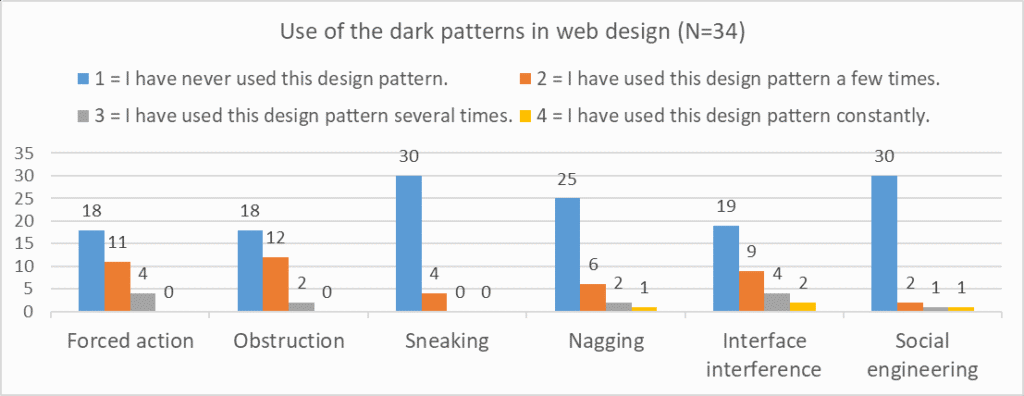
Figure 3. Respondents’ (N = 34) use of DPs in web design from the question “Have you used [name of the DP] when working in web design?”
The majority reported not having used DPs, varying from 18 to 30 respondents for each DP. Of the respondents, 11 (32%) stated that they had not used any of the 6 DPs, and 24 (71%) had never, or only a few times, used any of the 6 DPs. Sneaking was the least used DP; only 4 respondents (12%) had used it “a few times.” Social engineering was not used by 30 respondents (88%), 1 respondent had used it “constantly,” 1 respondent “several times,” and 2 respondents “a few times.” DPs that were used at least a few times or more often included interface interference (44%), forced action (44%), and obstruction (41%). Three respondents (9%) stated that they had used either interface inference, nagging, or social engineering “constantly,” whereas one respondent had used both nagging and interface interference “constantly.” Five respondents (15%) had used 2 or more DPs “several times” or “constantly.” Designers’ reasons for why they have used the DPs resulted in three main themes (Table 6): business reason, design reason, and user benefit. The first theme, business reason,gathered 29 notions. Forced action was utilized to support business earnings and marketing, and to use psychological insights to entice customers through design elements such as color and font. This was also linked to being forced to do so by product owners, driven by business objectives. Forced actionwas also considered to be a good instrument in short-term marketing, but not to be used long-term, as it would eventually damage the business. Using obstruction pertained to savings more than earnings (for example, it was used to discourage GDPR requests). Also, price comparison prevention to increase sales or prevent competition was mentioned, as well as following business policy. Notions about sneaking were related to situations in which users were not made aware of all costs, for example, having “fees that are shown at the very last step on the checkout” (R2), such as handling or shipping fees. Nagging was used for marketing purposes (for example, to offer users deals or promote events), and it was seen as more acceptable when it was directed only towards satisfied customers: “I have used pop-ups for app reviews timed and personalized so that only those users that are enjoying the app are asked to give a review” (R18). In addition, internal or external stakeholders’ pressure has led to the use of nagging against their own values: “I hate it” (R5). Interface interference was used to guide and expedite buying, and social engineering was used due to marketing reasons to promote brands and products, for example, “to promote a new feature by showing how many people are using it even though the numbers weren’t that optimistic” (R15).
Table 6. Designers’ Reasons Why DPs Have Been Used
| Reasons for Using DPs | FA | OB | SN | NG | II | SaE | Total Sub-Theme Notions |
|---|---|---|---|---|---|---|---|
| Business reason | 12 | 4 | 2 | 5 | 2 | 4 | 29 |
| Design reason | 4 | 4 | 2 | 3 | 8 | – | 21 |
| User benefit | 3 | 6 | – | 4 | 5 | – | 18 |
| Total DP notions | 19 | 14 | 4 | 12 | 15 | 4 | 68 |
FA (forced action); OB (obstruction); SN (sneaking); NG (nagging); II (interface interference); SE (social engineering)
The second theme, design reason, gathered 21 notions. Forced action included notions of following UI design conventions according to psychological knowledge and the need for personal data, both to support service functionality and facilitate service logic (that is, to gain delivery address details). Obstruction was used to organize complex information and hide less-used functions. Sneaking was used to provide a certain type of UX for the user, for example, when introducing a new product or guiding them through a certain task: “I want users to slowly receive information” (R22). Sneaking was also pondered to have been used unintentionally, although without approving it. Nagging was used as a design convention: “It is so common practice and widely used by competitors that [it] would feel a bit foolish not to use it, even though it does feel like cheating deep down to me” (R18), andnagging was used to inform users about new content or exceeding license limits. Interface interference was used due to complex content, for example, “We are using this when we want to direct the user to take a certain path” (R19).
The third sub-theme, user benefit, consisted of 18 notions. Forced action was explained as enforcing updates for security and functionality reasons. Obstruction was used for user benefits pertaining to the prevention of loss of data, accidental over-printing (paper waste), and preventing loss of connection. Notions related to nagging were to notify users about something important, such as updates or needed permissions, to prevent user harm, and to provide added value and benefits to the users. User benefits were mentioned together with avoiding complex content by using interface interference, for example, “I have used this pattern to reduce users’ workload by promoting ready-made templates and quick starts. These, of course, can contain some selections that aren’t a good fit for every user, but this, with a clear summary of the overall situation, is seen as a good pattern” (R15). Some of the respondents were not sure when interface interference should be considered a DP, for example, “Having preselected options was something I used once, but I am not sure if it would be considered as a dark pattern” (R12).
Company Culture and Deceptive Patterns’ Impact on Design Profession
Figure 4 presents the respondents’ answers about company policies of DPs in web and UX design. Seven respondents (21%) stated that their company has a policy, and 2 more respondents gave an open (other) answer: “Not a proper policy, but an ethical design mindset” (R16) and it’s “not an official policy, but ‘silent policy’” (R33). Both of these statements implied that informal approaches to ethical design are prominent within their companies. Half of the respondents replied that their companies did not have a policy, and 7 respondents did not know if their company had a policy.
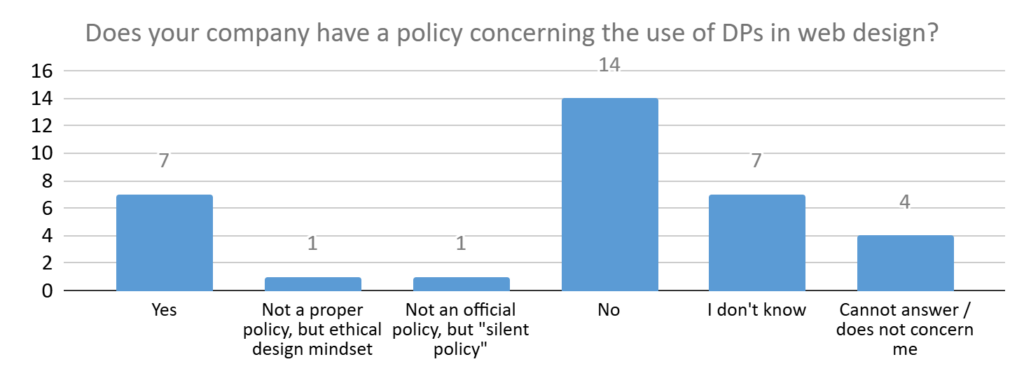
Figure 4. Respondents’ answers concerning company policies on using DPs in web and UX design (N = 34).
In response to the multiple-response question on what kind of policy the company has regarding DPs, 9 respondents (27%) reported always avoiding their use, of which 1 clarified further in an open (other) answer, stating that “we have a culture of ‘ethical design’” (R19). A similar viewpoint was supported in 2 of the 6 open (other) responses, stating that they have “guidance to select and commit only to practices that are ethically valid” (R5) and that “we don’t have a policy since this would be just wrong” (R29), implying that implementing DPs is unethical and might not need policies. Six (18%) respondents indicated relying on their own judgment, indicating that they might or might not implement DPs. Five (15%) respondents answered that they might use DPs in specific situations, of which one clarified that “obstruction can be used to avoid critical accidents” (R16). Two (6%) respondents stated that they negotiate with their team or supervisor case by case, and 1 (3%) indicated that they use DPs if the customer demands it. The last open (other) response simply stated, “I don’t know” (R6).
Concerning the Likert scale question, “Our company culture supports open discussions regarding the use of dark patterns in web design,” 7 (21%) respondents could not answer, or the question did not concern them. The average of the 25 answers given on a scale from 1 to 7 was 5.82 (SD = 1.54). Twenty (59%) respondents answered 6 or 7, suggesting that most of the respondents felt that their company culture is very open to discussing DPs. Three respondents (12%) felt that their companies do not support open discussions of DPs.
The last question in the survey asked the respondents to elaborate on their position about deceptive patterns and their impact on the design profession. Of the respondents, 29 (85%) described their position, and 5 gave an empty answer. Respondents’ positions ranged from not accepting the use of DPs to using them if they remain within what they consider an “ethical line.” Eleven respondents stated they opposed the use of DPs. Most of them (24%) indicated they were motivated by their own values: “There is no official policy, but I would prevent these as a gatekeeper” (R3). Whereas, the rest (9%) referred to company or customer policies: “The company has a policy to be honest in general” (R6). None of the respondents admitted accepting the use of DPs in every situation, but 12 (35%) respondents described situations in which they could understand why DPs would be used. Most of them (n = 6, 18%) referred to the dilemma of balancing between the business and user interest, or between the customer and the customer’s customer interest: “I’m a former idealist, current pragmatist. Over the years, I have started to accept some marketing tricks that veer towards the darkish side as long as we respect the user and stay authentic” (R9). Three respondents cited compulsory reasons (for example, legal requirements) for using DPs, and 2 mentioned user benefits.
The use of DPs was more topical for respondents working with commercial B2C businesses: “I feel that the more your design work is about selling something, the more you encounter demands or suggestions for dark patterns. If you work on the product that itself does not focus on selling more stuff to users, the less you would ever consider their dark patterns” (R18). Respondents mentioned that working with non-commercial or B2B products or in a company with high profitability reduced the need for DPs. In addition, 4 respondents mentioned that the use of DPs will eventually have a negative impact on the business: “These patterns never disappear. There will always be good companies caring about their reputation and bad companies using dirty tricks (and it’s usually not only about UX). Practice shows that people prefer the first ones, and these companies become the best in their field. So if the designer wants to be a part of a best company, they must use only ethic ways in their work” (R4).
Discussion
Our research reveals that web and UX designers in Finland are familiar with the concept of deceptive patterns; obstruction, social engineering, and forced action were the most familiar DPs. Furthermore, the results indicate that designers view DPs as incorporating different levels of deception and manipulation. Thus, they are not considered a single unified entity in terms of harmfulness. Our results show some variation among designers regarding the acceptability of the patterns, but there is general agreement that, with the exceptions of forced action and obstruction, deceptive patterns should never be used. For example, nagging and interface interference were found to be more acceptable, and obstruction divided opinions due to varying conceptualizations of the pattern.
Designers’ reasons for why DPs may be used and considered acceptable for web and UX design resulted in three themes: business reasons, design reasons, and user benefit. Forced action is considered the most acceptable DP in every theme; the pattern seemingly increases in acceptability if rewards or extra benefits are offered to the users. In addition, forced action was seen as acceptable to use for security reasons and regulation compliance (for example, in activities related to GDPR). The acceptability and justification of using obstruction focuses on business models, marketing, UI design, complex content, and harm prevention. Although obstructing users’ actions can enhance UX and security, obstruction acceptability hinges on its implementation and the balance between user autonomy and organizational benefits. Thus, it is not clear whether the designers understood obstruction in the same way, or which actions regarding obstruction were considered harmful or beneficial. Nagging is seen as an acceptable marketing tactic to engage users with the company. Designers described both internal (free content comes with a price) and external (the company aims for profit) justifications for the use of nagging. Nagging is also seen as acceptable from a design perspective as a way to steer users to notice critical updates or to prompt user actions.
Interface interference is seen as acceptable as a design-related solution justified with user benefits, for example, in guiding user interaction and in helping to reduce mental load. The use of social engineering is justified with benefits for business, users, or the common good. In addition to business benefits, the use of social engineering was motivated with the intent to change behavior, either for user benefit (for example, informing about beneficial actions) or for the benefit of others (for example, to steer toward sustainability-supporting behavior). Sneaking is seen as the least acceptable. Sneaking was justified if the harm to the user was tolerable. In addition to sneaking extra costs or subscriptions, extra rewards offered for free can be sneaked. Although done with positive intent, adding extra items without user consent can be seen to depress autonomy, and whether the customer experiences it positively depends on the case.
The responses indicate a robust ethical stance among designers against DPs, emphasizing user welfare over business harms and highlighting legal restrictions as an additional deterrent. Respondents emphasized that DPs conflict with their professional designer values, arguing that users should not be misled and that unethical practices should be avoided. Some of the designers noted that specific DPs, such as interface interference and social engineering, are regulated by Finnish legislation and should not be used. However, justifications referring to legislation were not mentioned within the Finnish web and UX designers as often as in the responses of New Zealander UX practitioners (Beattie et al., 2024). Furthermore, the results strengthen the previous research, indicating that the ethical tensions related to DP focus especially on designers working in the commercial sector (Beattie et al., 2024; Lacey et al., 2023; Zhang-Kennedy et al., 2024), as those working in the non-commercial context might not feel the imminent pressure as their designs are not directly linked to profit-seeking.
Most of the respondents reported that they had never used DPs. Of all the DPs, sneaking is the least used. This can be explained by sneaking being a highly context-specific pattern, focusing on the purchasing context. Furthermore, Singh et al. (2024) named sneaking as one of the riskiest DPs in the context of e-commerce because of its minimal benefits compared to the potential harms for the business. In contrast to sneaking, 68% of the designers reported using either forced action, obstruction,or interface interferenceat least a few times. The designer’s use of DPs again highlights a predominant ethical stance (moral compass) against the use of DPs. However, when DPs are used, justifications are reasoned with business needs, design conventions, and user benefits. Respondents also reflected on the complexity of distinguishing between ethical design and DPs.
In addition, we examined respondents’ perceptions of their companies’ policies and cultures concerning the use of DPs. The results indicate a mixed landscape of policies and cultural attitudes towards DPs in web and UX design among the respondents’ companies. Some companies have formal or informal policies promoting ethical design, but a significant number lack any policy, and a few respondents demanded clarification about their company’s stance. However, company cultures overall appear generally supportive of open discussions about DPs. In response to the question about the designer’s position regarding DPs and their impact on the design profession, a variety of attitudes towards DPs were displayed, from outright rejection to conditional acceptance within ethical boundaries. Designers are struggling with ethical dilemmas and strive to balance business imperatives with user-centric design principles. Based on this, the ways in which designers understand ethics in relation to the patterns vary. This finding aligns with previous research indicating UX designers’ problems in identifying boundaries between persuasive design versus manipulative design and understanding the consequences of DPs (Sánchez Chamorro et al., 2023).
The UX designer’s role is to design interactions that aim to fulfill user needs while balancing business requirements with technically enhanced experiences. This can be challenging for new researchers or designers with no formal education on the subject or with limited knowledge of ethics or moral conduct (Vi et al., 2019). DPs are sometimes described as the result of ill-willed designer intentions (Mathur et al., 2021). In light of our results, we can argue that for some, the reason can also be that designers do not fully understand the psychological factors affecting how people interact with UIs. Also, it may be argued that the designers assume they are making an ethical choice to use DPs to help the user make a choice that they will later benefit from (that the means justify the end). In addition, DPs are implemented by designers due to external pressure, such as external stakeholders, culture, and company policies (Sánchez Chamorro et al., 2023; see also Namer & Joines, 2025). Ideally, UX designers should function as gatekeepers in their companies, ensuring that, if DPs are implemented, there is adequate information regarding their harmfulness. Thus, designers could act as quality examiners, risk assessors, and as the responsibility bearers of ethical design in design and development teams. However, this would also elicit a high mental load in the overall management of design projects. Currently, it is not clear who is, or who should be, responsible for ethical design within design and development teams.
The current study comprises limitations. The study has a limited number of respondents with a concentration of respondents from Finland. Finland provides a glimpse into the experience of designers operating within strict legal frameworks and ethical norms. Future studies could investigate the situation in other national contexts, similarly to how this study broadened the findings from New Zealand by Beattie et al. (2024). In terms of the conceptual clarity, the analysis of the data reveals that there was some confusion among the responses in conceptualizing the DPs, particularly regarding forced action and obstruction, which indicated designer respondents had not entirely understood these DPs according to Gray et al. (2023). Thus, perhaps more descriptions or illustrations of the DP types should be used to guide the respondents’ understanding, or even to inquire into how they understand the DP (describe it in their own words). DP types operate via scientific knowledge of cognitive information processing, which would warrant more detail in terms of how the designers comprehend the DPs operating. On this note, it was difficult to ascertain whether designers understood if they were engaging in DPs, that is, if they had an inability to decipher what can be considered a DP and what cannot.
Moreover, analysis of the responses points towards the possibility to discuss ethical dilemmas related to the (libertarian) paternalism (Barton & Grüne-Yanoff, 2015) in understanding underlying bias and power dynamics behind the DPs and the decisions to use them. For instance, some sentiments expressed by designers when describing why they engage in design activities that could be considered DPs carried a tone of protecting the users. This tendency for designers to justify possibly unethical design with the underlying aim of doing good was also indicated in the study by Sánchez Chamorro et al. (2023). Common themes in the data comprising harm prevention and extra benefit reveal designers claim agency on behalf of the user by assuming that the users will make mistakes and that somehow users will perceive extra benefit when someone decides on their behalf (Clausen et al., 2022; see also Mildner et al., 2024).
Recommendations
- We found several fruitful avenues to advance this current research. For instance, the ways in which designers understand the terminology developed in academia of DPs should be examined. Overall, extensive work has been invested into creating ontologies and typologies of deceptive or DPs in design, yet the classification of these activities and design strategies from a designer perspective is still lacking. From the perspectives of cultural and socio-political understandings of DPs and designer positionality, more research should be dedicated to collecting qualitative insights from a larger, international, and multicultural sample.
- Another matter that emerged while conducting the analysis was the ambiguous inner logic of obstruction. This would benefit from attention as designers displayed a lack of unanimity in its conceptualization as to whether it is indeed a DP or rather a UI design technique. This also raises the question of exploring the thresholds between UI and UX design conventions and what can be considered deceptive practices.
- Future research needs to address whether legislation and UX designers as gatekeepers could make a difference, and to what extent designers have power, possibilities, and capabilities for ethical assessment. Furthermore, designers’ understanding and compliance with legislation would be critical to examine in terms of the likelihood of intentionally engaging in designing DPs. Future studies could venture to discover the viewpoints of other stakeholders to broaden the understanding of why DPs are implemented and to examine designers’ intentionality and designers’ possibilities to influence ethical decision-making in relation to DPs. Finally, future research should also be focused on examining the dynamics between ethical and moral codes for design practice between freelancers (self-employed, directly concerned about the financial income of a company) and designers employed by other companies.
- DPs have already been acknowledged in the ACM Code of Ethics and Professional Conduct, as can be seen in the case example of DPs (Association for Computing Machinery, 2018). Increasing designer and end-user awareness of DPs, for example, via interventions such as bright patterns, training games, and design frictions, is central.
- Focus should also be placed on maturing the research area (for example, clarifications of the conceptual landscape and its relation to ethical design). This should be reinforced by integrating knowledge of deceptive design and ethics in HCI design and education. Thus, future HCI design practices should incorporate ethical considerations explicitly.
Conclusion
In recent years, transdisciplinary perspectives have emerged to confront DPs. Scholars and practitioners aim to raise awareness, reinforce legal efforts, and induce a sense of self-reflexivity among designers. Yet, as Narayanan et al. (2020) emphasize, deceptive patterns “are here to stay” (p. 78). Designers, developers, and researchers need to be diligent in producingwell-intended designs from the user’s perspective and also in terms of understanding ethical implications in decision-making. Regulations are created to govern DPs to ensure a fair market and protect users. Numerous high-quality policies and ethical and design regulations that address the issues of technology manipulation to ensure user autonomy have been proposed (Gray et al., 2023). Protecting users from DPs and bringing more transparency into the digital environment is challenging. Further, guidelines are often optional, and more research on the potential harm of DPs is needed (Narayanan et al., 2020). HCI and design scholars must work side-by-side with the law, applying detailed ethical and cultural knowledge to protect users.
Moreover, from the designer’s perspective, there are competing forces in UX design that can lead to deceptive design tendencies (that is, the professional’s dilemma, or cognitive dissonance induced by tensions between personal moral codes and employer demands). Thus, UX designers have ethical responsibilities and possibilities to influence, as was highlighted recently by Baecker (2022). According to our results, although the designers stated that they have power in making design decisions, they did not specify what types of decisions they could make. Future research should concentrate on what kinds of design decisions the designers have more control over. For instance, can they affect decisions made towards implementing DPs? Design goals might be externally dictated (for example, to gather people’s interests or increase the convergence rate and the number of subscribers), whereas designers may be sensitive to ethics in their design, that is, through education, personal experiences, moral bases (compasses), and belief systems. Most importantly, organizations should support designers by developing internal policies to mitigate deceptive practices and by raising awareness through educating both designers and product teams. Additionally, future research should further address the differences between self-employed designers (freelancers) and designers employed by companies. This shift in dynamics, both in terms of agency and influence on decision-making as well as financial stakes in the design work provided, may very well influence approaches, attitudes, and enactments of ethics within designed products and services. Increasing awareness of ethical issues among designers could be an effective way to induce ethical design practices, but more thorough understandings of designer ecosystems and organizational dynamics should also be considered.
Tips for User Experience Practitioners
- Aim to evaluate each design choice carefully in terms of whether it suppresses user autonomy before implementing it. Avoid being too easily led by the industry norms to implement DPs.
- Recognize that not all pop-ups, pre-selections, and other ways to steer users are necessarily deceptive. Often, DPs can be identified based on whether the suppression of user autonomy causes harm to the user.
- Encourage your team members and other stakeholders to learn about DPs. Especially if you are struggling in the role of an ethical gatekeeper, increasing stakeholder awareness of DPs and knowledge of their consequences can be helpful.
References
ACM Diversity and Inclusion Council. (2025, February 19). Words matter. Alternatives for charged terminology in the computing profession. Retrieved September 2025, fromhttps://www.acm.org/diversity-inclusion/words-matter
Association for Computing Machinery. (2018, June 22). ACM code of ethics and professional conduct. https://ethics.acm.org/code-of-ethics/
Alberts, L., Lyngs, U., & Van Kleek, M. (2024). Computers as bad social actors: Dark patterns and anti-patterns in interfaces that act socially. Proceedings of the ACM on Human-Computer Interaction, 8(CSCW1), 1–25. https://doi.org/10.1145/3653693
Al-Msallam, S., Xi, N., & Hamari, J. (2023). Ethical considerations in gamified interactive marketing praxis. In C. L. Wang (Ed.), The Palgrave handbook of interactive marketing (pp. 963–985). Springer. https://doi.org/10.1007/978-3-031-14961-0_41
Aung, K. W., Soubutts, E., & Singh, A. (2024). “What a stupid way to do business”: Towards an understanding of older adults’ perceptions of deceptive patterns and ways to develop resistance. Proceedings of the ACM on Human-Computer Interaction, 8(CHI PLAY), 1–31. https://doi.org/10.1145/3677113
Baecker, R. M. (2022). Digital dreams have become nightmares: UX for ethical technology use. Interactions, 29(2), 50–53. https://doi.org/10.1145/3512990
Barton, A., & Grüne-Yanoff, T. (2015). From libertarian paternalism to nudging—and beyond. Review of Philosophy and Psychology, 6(3), 341–359. https://doi.org/10.1007/s13164-015-0268-x
Beattie, A., Lacey, C., & Caudwell, C. (2024). “It’s like the Wild West”: User experience (UX) designers on ethics and privacy in Aotearoa New Zealand. Design and Culture, 16(1), 63–82. https://doi.org/10.1080/17547075.2023.2211391
Bhoot, A. M., Shinde, M. A., & Mishra, W. P. (2020, December). Towards the identification of dark patterns: An analysis based on end-user reactions. Proceedings of the 11th Indian Conference on Human-Computer Interaction, 24–33. https://doi.org/10.1145/3429290.3429293
Bilgihan, A. (2016). Gen Y customer loyalty in online shopping: An integrated model of trust, user experience, and branding. Computers in Human Behavior, 61, 103–113. https://doi.org/10.1016/j.chb.2016.03.014
Bongard-Blanchy, K., Rossi, A., Rivas, S., Doublet, S., Koenig, V., & Lenzini, G. (2021, June). “I am definitely manipulated, even when I am aware of it. It’s ridiculous!” Dark patterns from the end-user perspective. Proceedings of the 2021 ACM Designing Interactive Systems Conference, 763–776. https://doi.org/10.1145/3461778.3462086
Bösch, C., Erb, B., Kargl, F., Kopp, H., & Pfattheicher, S. (2016). Tales from the dark side: Privacy dark strategies and privacy dark patterns. Proceedings on Privacy Enhancing Technologies, 2016(4), 237–254. https://doi.org/10.1515/popets-2016-0038
Braun, V., & Clarke, V. (2006). Using thematic analysis in psychology. Qualitative Research in Psychology, 3(2), 77–101. https://doi.org/10.1191/1478088706qp063oa
Brignull, H. (2010). Dark patterns: User Interfaces Designed to Trick People. Dark Patterns. Retrieved September 2025, from https://old.deceptive.design/main_page/index.html
Brignull, H. (2023). Deceptive patterns: Exposing the tricks tech companies use to control you. Testimonium.
Brignull, H., Leiser, M., Santos, C., & Doshi, K. (2023, April 25). Deceptive patterns: User interfaces designed to trick you. Deceptive Patterns. Retrieved September 2025, from https://www.deceptive.design/
Calvo, R. A., & Peters, D. (2014). Positive computing: Technology for wellbeing and human potential. MIT Press. https://doi.org/10.7551/mitpress/9764.001.0001
Calvo, R. A., & Peters, D. (2015, April). Introduction to positive computing: Technology that fosters wellbeing. Proceedings of the CHI 2015 Conference on Human Factors in Computing Systems, 2499–2500. https://doi.org/10.1145/2702613.2706674
Cambridge University Press & Assessment. (2024). Pattern. Retrieved September 2025, from https://dictionary.cambridge.org/dictionary/english/pattern
Caragay, E., Xiong, K., Zong, J., & Jackson, D. (2024, May). Beyond dark patterns: A concept-based framework for ethical software design. Proceedings of the CHI Conference on Human Factors in Computing Systems, 1–16. https://doi.org/10.1145/3613904.3642781
Chaudhary, A., Saroha, J., Monteiro, K., Forbes, A. G., & Parnami, A. (2022). “Are you still watching?” Exploring unintended user behaviors and dark patterns on video streaming platforms. Proceedings of the 2022 ACM Designing Interactive Systems Conference, 776–791. https://doi.org/10.1145/3532106.3533562
Cheng, Y., & Jiang, H. (2020). How do AI-driven chatbots impact user experience? Examining gratifications, perceived privacy risk, satisfaction, loyalty, and continued use. Journal of Broadcasting & Electronic Media, 64(4), 592–614. https://doi.org/10.1080/08838151.2020.1834296
Chivukula, S. S., Brier, J., & Gray, C. M. (2018, May). Dark intentions or persuasion? UX designers’ activation of stakeholder and user values. Proceedings of the 2018 ACM Conference Companion Publication on Designing Interactive Systems, 87–91. https://doi.org/10.1145/3197391.3205417
Chivukula, S. S., Watkins, C., McKay, L., & Gray, C. M. (2019, May). “Nothing comes before profit:” Asshole design in the wild. Extended Abstracts of the 2019 CHI Conference on Human Factors in Computing Systems, 1–6. https://doi.org/10.1145/3290607.3312863
Clarke, V., & Braun, V. (2021). Thematic analysis: A practical guide. SAGE.
Clausen, S., Marx, J., Mirbabaie, M., & Stieglitz, S. (2022, November). From dark patterns to digital sludging: Mapping the ethical debate on controversial persuasive system design. Proceedings of the International Conference on Information Systems. https://aisel.aisnet.org/icis2022/soc_impact_is/soc_impact_is/11/
Competition and Markets Authority. (2022). Evidence review of online choice architecture and consumer and competition harm. GOV.UK. Retrieved September 2025, from https://www.gov.uk/government/publications/online-choice-architecture-how-digital-design-can-harm-competition-and-consumers/evidence-review-of-online-choice-architecture-and-consumer-and-competition-harm
Cockton, G. (2020). Worth-focused design, book 2: Approaches, contexts, and case studies. Springer International Publishing. https://doi.org/10.1007/978-3-031-02230-2
Conti, G., & Sobiesk, E. (2010, April). Malicious interface design: Exploiting the user. Proceedings of the 19th International Conference on World Wide Web, 271–280. https://doi.org/10.1145/1772690.1772719
Day, G., & Stemler, A. (2019). Are dark patterns anticompetitive? SSRN Electronic Journal. https://doi.org/10.2139/ssrn.3468321
Di Geronimo, L., Braz, L., Fregnan, E., Palomba, F., & Bacchelli, A. (2020, April). UI dark patterns and where to find them: A study on mobile applications and user perception. Proceedings of the CHI 2020 Conference on Human Factors in Computing Systems, 1–14. https://doi.org/10.1145/3313831.3376600
Fansher, M., Chivukula, S. S., & Gray, C. M. (2018, April). #darkpatterns: UX practitioner conversations about ethical design. In Extended Abstracts of the 2018 CHI Conference on Human Factors in Computing Systems, 1–6. https://doi.org/10.1145/3170427.3188553
Finnish National Board on Research Integrity. (2024, December 5). Research integrity (RI). Retrieved September 2025, from https://tenk.fi/en/research-integrity-ri
Gray, C. M., & Chivukula, S. S. (2019, May). Ethical mediation in UX practice. Proceedings of the 2019 CHI conference on human factors in computing systems, 1–11. https://doi.org/10.1145/3290605.3300408
Gray, C. M., Chivukula, S. S., & Lee, A. (2020, July). What kind of work do “asshole designers” create? Describing properties of ethical concern on Reddit. Proceedings of the 2020 ACM designing interactive systems conference, 61–73. https://doi.org/10.1145/3357236.3395486
Gray, C. M., Gairola, R., Boucaud, N., Hashmi, M., Chivukula, S. S., Menon, A. R., & Duane, J. (2024a, July). Legal trouble?: UX practitioners’ engagement with law and regulation. Proceedings of the 2024 ACM Conference Companion Publication on Designing Interactive Systems, 106–110. https://doi.org/10.1145/3656156.3663698
Gray, C. M., Kou, Y., Battles, B., Hoggatt, J., & Toombs, A. L. (2018, April). The dark (patterns) side of UX design. Proceedings of the CHI 2018 Conference on Human Factors in Computing Systems, 1–14. https://doi.org/10.1145/3173574.3174108
Gray, C. M., Santos, C., & Bielova, N. (2023, April). Towards a preliminary ontology of dark patterns knowledge. Extended Abstracts of the 2023 CHI Conference on Human Factors in Computing Systems, 1–9. https://doi.org/10.1145/3544549.3585676
Gray, C. M., Santos, C. T., Bielova, N., & Mildner, T. (2024b, May). An ontology of dark patterns knowledge: Foundations, definitions, and a pathway for shared knowledge-building. Proceedings of the CHI 2024 Conference on Human Factors in Computing Systems, 1–22. https://doi.org/10.1145/3613904.3642436
Greenberg, S., Boring, S., Vermeulen, J., & Dostal, J. (2014, June). Dark patterns in proxemic interactions: A critical perspective. Proceedings of the 2014 Conference on Designing Interactive Systems, 523–532. https://doi.org/10.1145/2598510.2598541
Jordan, P. W. (2000). Designing pleasurable products: An introduction to the new human factors. CRC Press.
Kollmer, T., & Eckhardt, A. (2023). Dark patterns: Conceptualization and future research directions. Business & Information Systems Engineering, 65(2), 201–208. https://doi.org/10.1007/s12599-022-00783-7
Krauss, V., Saeghe, P., Boden, A., Khamis, M., McGill, M., Gugenheimer, J., & Nebeling, M. (2024). What makes XR dark? Examining emerging dark patterns in augmented and virtual reality through expert co-design. ACM Transactions on Computer-Human Interaction, 31(3), 1–39. https://doi.org/10.1145/3660340
Lacey, C., Beattie, A., & Sparks, T. (2023). Clusters of dark patterns across popular websites in New Zealand. International Journal of Communication, 17, 3164–3188.
Luguri, J., & Strahilevitz, L. J. (2021). Shining a light on dark patterns. Journal of Legal Analysis, 13(1), 43–109. https://doi.org/10.1093/jla/laaa006
Lupiáñez-Villanueva, F., Boluda, A., Bogliacino, F., Liva, G., Lechardoy, L., Rodríguez de las Heras Ballell, T., & Directorate-General for Justice and Consumers (European Commission). (2022). Behavioural study on unfair commercial practices in the digital environment: Dark patterns and manipulative personalisation: Final report. Publications Office of the European Union. Retrieved September 2025, from https://data.europa.eu/doi/10.2838/859030
Mathur, A., Acar, G., Friedman, M. J., Lucherini, E., Mayer, J., Chetty, M., & Narayanan, A. (2019). Dark patterns at scale: Findings from a crawl of 11K shopping websites. Proceedings of the ACM on Human-Computer Interaction, 3(CSCW), 1–32. https://doi.org/10.1145/3359183
Mathur, A., Kshirsagar, M., & Mayer, J. (2021, May). What makes a dark pattern… dark? Design attributes, normative considerations, and measurement methods. Proceedings of the CHI 2021 Conference on Human Factors in Computing Systems, 1–18. https://doi.org/10.1145/3411764.3445610
Merriam-Webster (2025, September 11). Pattern. Retrieved September 2025, from https://www.merriam-webster.com/dictionary/pattern
Mildner, T., Inkoom, A., Malaka, R., & Niess, J. (2024). Hell is paved with good intentions: The intricate relationship between cognitive biases and dark patterns (Version 1). arXiv. https://doi.org/10.48550/ARXIV.2405.07378
Mildner, T., & Savino, G. (2021, May). Ethical user interfaces: Exploring the effects of dark patterns on Facebook. In Extended Abstracts of the 2021 CHI Conference on Human Factors in Computing Systems, 1–7. https://doi.org/10.1145/3411763.3451659
Mildner, T., Savino, G.-L., Doyle, P. R., Cowan, B. R., & Malaka, R. (2023, April). About engaging and governing strategies: A thematic analysis of dark patterns in social networking services. Proceedings of the 2023 CHI Conference on Human Factors in Computing Systems, 1–15. https://doi.org/10.1145/3544548.3580695
Namer, L., & Joines, S. (2025). What 96 designers taught us about harm: The behaviors around considering harm in digital products. Journal of User Experience, 20(3), 125–142.
Narayanan, A., Mathur, A., Chetty, M., & Kshirsagar, M. (2020). Dark patterns: Past, present, and future. Communications of the ACM, 63(9), 42–47. https://doi.org/10.1145/3397884
Niedermoser, D. W., Petitjean, S., Schweinfurth, N., Wirz, L., Ankli, V., Schilling, H., Zueger, C., Meyer, M., Poespodihardjo, R., Wiesbeck, G., & Walter, M. (2021). Shopping addiction: A brief review. Practice Innovations, 6(3), 199–207. https://doi.org/10.1037/pri0000152
Norman, D. A. (2004). Emotional design: Why we love (or hate) everyday things. Civitas Books.
Phillips, C. (2017, December 12). 9½ plausible and/or absurd UX industry predictions for 2018. Retrieved September 2025, from https://uxdesign.cc/9-%C2%BD-plausible-and-or-absurd-ux-industry-predictions-for-2018-542897a6446a
Potel-Saville, M., & Da Rocha, M. (2024). From dark patterns to fair patterns? Usable taxonomy to contribute solving the issue with countermeasures. In K. Rannenberg, P. Drogkaris, & C. Lauradoux (Eds.), Privacy technologies and policy (Lecture Notes in Computer Science, Vol. 13888, pp. 145–165). Springer. https://doi.org/10.1007/978-3-031-61089-9_7
Pricopoaia, O., Cadinoiu, M., Cristache, N., & Matis, C. (2020). The impact of excessive online shopping on consumer behaviour. Risk in Contemporary Economy, 1(1), 35–46. https://doi.org/10.35219/rce2067053269
Rogers, Y., Brereton, M., Dourish, P., Forlizzi, J., & Olivier, P. (2021, May). The dark side of interaction design. Extended Abstracts of the 2021 ACM Conference on Human Factors in Computing Systems, 1–2. https://doi.org/10.1145/3411763.3450397
Rousi, R., Piispanen, J. R., & Boutellier, J. (2024). I trust you Dr. researcher, but not the company that handles my data: Trust in the data economy. Proceedings of the 57th Hawaii International Conference on System Sciences, 4632–4641. https://hdl.handle.net/10125/106941
Sánchez Chamorro, L., Bongard-Blanchy, K., & Koenig, V. (2023, July). Ethical tensions in UX design practice: Exploring the fine line between persuasion and manipulation in online interfaces. Proceedings of the 2023 ACM Designing Interactive Systems Conference, 2408–2422. https://doi.org/10.1145/3563657.3596013
Seligman, M. E. P., & Csikszentmihalyi, M. (2014). Positive psychology: An introduction. In M. Csikszentmihalyi, Flow and the foundations of positive psychology (pp. 279–298). Springer. https://doi.org/10.1007/978-94-017-9088-8_18
Singh, V., Vishvakarma, N. K., & Kumar, V. (2025). Dark patterns, dimmed brands: The erosion of equity through deceptive design in e-commerce. Internet Research. Advance online publication. https://doi.org/10.1108/INTR-07-2024-1026
Singh, V., Vishvakarma, N. K., Mal, H., & Kumar, V. (2024). Prioritizing dark patterns in the e-commerce industry: An empirical investigation using analytic hierarchy process. Measuring Business Excellence, 28(2), 177–192. https://doi.org/10.1108/MBE-08-2023-0114
Sunstein, C. R. (2015). The ethics of nudging. Yale Journal on Regulation, 32(2), 413–450.
Waldman, A. E. (2020). Cognitive biases, dark patterns, and the “privacy paradox.” Current Opinion in Psychology, 31, 105–109. https://doi.org/10.1016/j.copsyc.2019.08.025
Weinmann, M., Schneider, C., & von Brocke, J. (2016). Digital nudging. Business & Information Systems Engineering, 58(6), 433–436. https://doi.org/10.1007/s12599-016-0453-1
Willermark, S., & Islind, A. S. (2022, September). Choice architecture: Friend or foe? Future designers’ perspective on the ethics of digital nudges. Proceedings of the 13th Scandinavian Conference on Information Systems, 4. https://aisel.aisnet.org/scis2022/4
Vi, S., da Silva, T. S., & Maurer, F. (2019, August). User experience guidelines for designing HMD extended reality applications. Proceedings of IFIP Conference on Human-Computer Interaction, 319–341. https://doi.org/10.1007/978-3-030-29390-1_18
Voigt, C., Schlögl, S., & Groth, A. (2021). Dark patterns in online shopping: Of sneaky tricks, perceived annoyance and respective brand trust. In F. F.-H. Nah & K. Siau (Eds.), HCI in business, government and organizations (Lecture Notes in Computer Science, Vol. 12783, pp. 143–155). Springer International Publishing. https://doi.org/10.1007/978-3-030-77750-0_10
Yani-de-Soriano, M., Javed, U., & Yousafzai, S. (2012). Can an industry be socially responsible if its products harm consumers? The case of online gambling. Journal of Business Ethics, 110, 481–497. https://doi.org/10.1007/s10551-012-1495-z
Zagal, J., Björk, S., & Lewis, C. (2013). Dark patterns in the design of games [Conference paper]. Foundations of Digital Games 2013 [on behalf of Society for the Advancement of the Science of Digital Games]. https://www.diva-portal.org/smash/record.jsf?pid=diva2:1043332
Zhang-Kennedy, L., Keleher, M., & Valiquette, M. (2024). Navigating the gray: Design practitioners’ perceptions toward the implementation of privacy dark patterns. Proceedings of the ACM on Human-Computer Interaction, 8(CSCW1), 1–26. https://doi.org/10.1145/3637374
Appendix 1. Survey
| Question | Question Type | Response Options |
|---|---|---|
| What comes to your mind when you hear the term dark patterns in web design? | Open-ended question | |
| Forced action: forcing users to do something to access or continue access to specific functionality. E.g., forcing to update before continuing usage, or forcing to give permission to store personal information to gain access, or asking to recruit friends as users to gain benefits. How familiar are you with the phenomenon of Forced action? | Single-choice question | I did not know anything about this design pattern before. I know the existence of this design pattern, but I am not very familiar with it. I am somewhat familiar with this design pattern. I am very familiar with this design pattern. |
| How do you feel about using Forced action in web design? | Likert-type scale | It is never acceptable to use this design pattern. It is sometimes acceptable to use this design pattern. It is often acceptable to use this design pattern. It is always acceptable to use this design pattern. |
| Is there a situation when you feel that it is acceptable to Forced action in web design? If yes, please give an example of such situation. | Open-ended question | |
| Have you used Forced action when working in web design? | Single-choice question | I have never used this design pattern. I have used this design pattern a few times. I have used this design pattern several times. I have used this design pattern constantly. |
| If you have used Forced action when working in web design, what was the reason? Please explain how and why you used it? | Open-ended question | |
| Obstruction: making it more difficult than it should be for the user to carry out their task. E.g., making it hard to cancel a subscription or close your account, or obstructing price and product comparison. How familiar are you with the phenomenon of Obstruction? | Single-choice question | I did not know anything about this design pattern before. I know the existence of this design pattern, but I am not very familiar with it. I am somewhat familiar with this design pattern. I am very familiar with this design pattern. |
| How do you feel about using Obstruction in web design? | Likert-type scale | It is never acceptable to use this design pattern. It is sometimes acceptable to use this design pattern. It is often acceptable to use this design pattern. It is always acceptable to use this design pattern. |
| Is there a situation when you feel that it is acceptable to use Obstruction in web design? If yes, please give an example of such situation. | Open-ended question | |
| Have you used Obstruction when working in web design? | Single-choice question | I have never used this design pattern. I have used this design pattern a few times. I have used this design pattern several times. I have used this design pattern constantly. |
| If you have used Obstruction when working in web design, what was the reason? Please explain how and why you used it? | Open-ended question | |
| Sneaking: hiding, disguising, or delaying information from the users, so that they perform actions they otherwise would object. E.g., inducing hidden costs, adding items to shopping cart without consent, changing user privacy settings, using ‘bait and switch’ for example using an X icon that opens a new page. How familiar are you with the phenomenon of Sneaking? | Single-choice question | I did not know anything about this design pattern before. I know the existence of this design pattern, but I am not very familiar with it. I am somewhat familiar with this design pattern. I am very familiar with this design pattern. |
| How do you feel about using Sneaking in web design? | Likert-type scale | It is never acceptable to use this design pattern. It is sometimes acceptable to use this design pattern. It is often acceptable to use this design pattern. It is always acceptable to use this design pattern. |
| Is there a situation when you feel that it is acceptable to Sneaking in web design? If yes, please give an example of such situation. | Open-ended question | |
| Have you used Sneaking when working in web design? | Single-choice question | I have never used this design pattern. I have used this design pattern a few times. I have used this design pattern several times. I have used this design pattern constantly. |
| If you have used Sneaking when working in web design, what was the reason? Please explain how and why you used it? | Open-ended question | |
| Nagging: repeatedly interrupting the user and trying to redirect their focus to something that is not in their best interest. E.g., repeating notifications, using pop-ups that obscure the interface, or distracting audio notices. How familiar are you with the phenomenon of Nagging? | Single-choice question | I did not know anything about this design pattern before. I know the existence of this design pattern, but I am not very familiar with it. I am somewhat familiar with this design pattern. I am very familiar with this design pattern. |
| How do you feel about using Nagging in web design? | Likert-type scale | It is never acceptable to use this design pattern. It is sometimes acceptable to use this design pattern. It is often acceptable to use this design pattern. It is always acceptable to use this design pattern. |
| Is there a situation when you feel that it is acceptable to Nagging in web design? If yes, please give an example of such situation. | Open-ended question | |
| Have you used Nagging when working in web design? | Single-choice question | I have never used this design pattern. I have used this design pattern a few times. I have used this design pattern several times. I have used this design pattern constantly. |
| If you have used Nagging when working in web design, what was the reason? Please explain how and why you used it? | Open-ended question | |
| Interface interference: UI manipulation that emphasizes specific actions and thus confuses the users and/or limits discoverability. E.g., hiding information, having preselected options, manipulating aesthetics, toying with emotions to get users to act in certain ways, disguising ads, using checkboxes to opt out instead of opting in. How familiar are you with the phenomenon of Interface interference? | Single-choice question | I did not know anything about this design pattern before. I know the existence of this design pattern, but I am not very familiar with it. I am somewhat familiar with this design pattern. I am very familiar with this design pattern. |
| How do you feel about using Interface interference in web design? | Likert-type scale | It is never acceptable to use this design pattern. It is sometimes acceptable to use this design pattern. It is often acceptable to use this design pattern. It is always acceptable to use this design pattern. |
| Is there a situation when you feel that it is acceptable to Interface interference in web design? If yes, please give an example of such situation. | Open-ended question | |
| Have you used Interface interference when working in web design? | Single-choice question | I have never used this design pattern. I have used this design pattern a few times. I have used this design pattern several times. I have used this design pattern constantly. |
| If you have used Interface interference when working in web design, what was the reason? Please explain how and why you used it? | Open-ended question | |
| Social Engineering: deceiving users with false beliefs and via personalization. E.g., indicating false urgency, false scarcity such as low stock, or false social proof such as fake endorsements, confirm shaming. How familiar are you with the phenomenon of Social engineering? | Single-choice question | I did not know anything about this design pattern before. I know the existence of this design pattern, but I am not very familiar with it. I am somewhat familiar with this design pattern. I am very familiar with this design pattern. |
| How do you feel about using Social engineering in web design? | Likert-type scale | It is never acceptable to use this design pattern. It is sometimes acceptable to use this design pattern. It is often acceptable to use this design pattern. It is always acceptable to use this design pattern. |
| Is there a situation when you feel that it is acceptable to use Social engineering in web design? If yes, please give an example of such situation. | Open-ended question | |
| Have you used Social engineering when working in web design? | Single-choice question | I have never used this design pattern. I have used this design pattern a few times. I have used this design pattern several times. I have used this design pattern constantly. |
| If you have used Social engineering when working in web design, what was the reason? Please explain how and why you used it? | Open-ended question | |
| Does your company have a policy concerning the use of dark patterns in web design? | Single-choice question with an open-ended option | Yes; No; I don’t know; Cannot answer / does not concern me; Other (open-ended) |
| If there is a policy concerning the use of dark patterns, what is it? You can choose multiple options. | Multiple selection question with an open-ended option | Always avoid using dark patterns; Negotiate with the team/supervisor case by case; Use them in specific kinds of situations only (you can clarify this with the Other option at the end); Use them if the customer demands; Use your own judgement; There is no policy / Cannot answer; Other (open-ended). |
| Our company culture supports open discussions regarding the use of dark patterns in web design. | Likert-type scale | 0. Cannot answer / Does not concern me 1. I completely disagree 4. I do not agree or disagree 7. I completely agree |
| Please elaborate freely on how do you position yourself in relation to dark patterns and their impact on the design profession? | Open-ended question | |
| Age | Open-ended question | |
| Gender | Single-choice question with an open-ended option | Female; Male; Non-binary; Prefer not to disclose; Other (open-ended) |
| Country of residence? | Open-ended question | |
| Are you currently… | Single-choice question with an open-ended option | Working in a company; A freelancer (self-employed and hired to work for different companies on particular assignments); Entrepreneur (a person who sets up a business, taking on financial risks in the hope of profit); Unemployed; Other (open-ended) |
| What is your most recent work title? Choose one that is closest to your work description or use the Other-option. | Single-choice question with an open-ended option | UX (user experience) designer; UX team lead; Interaction designer; Service designer; Front-end developer; Visual designer; Other (open-ended) |
| How many years of work experience do you have in UX / web design? | Open-ended question | |
| What type(s) of businesses have you been working in during the last 12 months in relation to UX/web design? Choose all that apply. You can add more areas with the Other-field at the bottom. | Multiple selection question with an open-ended option | E-commerce (buying and selling goods over the internet); Retail (stores selling goods and services directly to consumers); Insurance; Banking; Healthcare; Government; Education; Travel; Gaming; Technology; Other (open-ended) |
| In what type of businesses do you currently work in relation to UX/web design? Choose all that apply. You can add more areas with the Other-field at the bottom. | Multiple selection question with an open-ended option | E-commerce (buying and selling goods over the internet); Retail (stores selling goods and services directly to consumers); Insurance; Banking; Healthcare; Government; Education; Travel; Gaming; Technology; Unemployed; Other (open-ended) |
| How would you describe the company you currently work for? (See the last options if you do not work in a company) | Single-choice question with an open-ended option | Small (less than 100) employees; Medium (101-500) employees; Large (500+) employees; I am a freelancer; Other (open-ended) |
| How many designers are in the UX team of your company? (answer 1 if you work alone) | Open-ended question | |
| How would you describe the power you have regarding the design decisions made in your most recent web design project? | Likert-type scale | 0. Cannot answer / Does not concern me 1. Not power to make design decisions 7. Very much power to make design decisions |